- Your cart is empty
- Continue Shopping


Tired of Frizzy Hair? Simple Care Tips for Smoother-Looking Hair
-
 kerafinekf.com
 - Posted on
- 0 comments


Frizzy hair is troublesome to deal with. Your hair might appear nice and straight at home, but it can be frizzy and hard to handle once you’re out of the house. If you also feel your hair becomes dry after washing, or develop flyways during the day, or become noticeable worsen in humid weather.
But frizz isn’t caused by one single problem — and it doesn’t mean your hair is automatically unhealthy.
Factors such as humidity, heat, hair color, chemical treatments, the texture of your natural hair, and even how you take care of your hair can all play a role in the amount of frizz you notice.
The good news? Don’t try to alter your hair’s natural texture to get rid of unwanted frizz. The key is to figure out what is causing your hair to frizz up and create a hair care routine that works for your hair and makes it easier to manage.
We’ll cover why hair frizzes, how to control it, what to do when it feels dry or straw-like, how to manage frizzy hair in humid weather, some products to try and a simple routine to help work with instead of against your hair.
What is Frizzy Hair?
Frizzy hair is hair that looks fuzzy, puffy, rough, flyaway or less defined than the other strands.
The outermost part of each hair is known as the cuticle. The smoother the hair surface is, the more polished the hair will appear. If hair becomes dry, damaged or affected by moisture and friction, the surface can become less uniform, making the frizz more noticeable. Humidity can also influence the behaviour of the hair.
Which is why frizz can vary between people.
People with straight hair might see small flyways around the crown and rough ends. Puffiness, loss of definition, or individual strands that are detaching from the curl pattern may be observed by someone with wavy or curly type of hair.
Is frizzy hair always damaged?
No.
Frizz can be caused by natural hair texture. Natural oils may not readily travel down the hair shaft and may lead to dryness in tightly textured and curly hair.
However, If your hair is suddenly a lot rougher, drier, more brittle or likely to break though, it’s time to consider other changes, heat, chemical treatments, or general hair condition.
What Is the Root Cause of Frizzy Hair?
There is no single root cause of frizzy hair.
Frizz is like the outcome of a number of issues instead of just one hair issue.
1. Dryness: Dry hair is not only a nuisance to handle but may also look rough and dull. The characteristics of your hair, cleansing routine, environment and styling practices can all affect the dryness of your hair.
2. Humidity: One of the primary causes of hair suddenly looking fuzzier is because of humidity.Hairs may swell and take up shape when they come into contact with moisture from the air. It can be particularly pronounced in individuals with naturally curly or wavy hair or those with dry hair.
3. Heat styling: Damage to the hair can be caused by using these hot implements frequently, such as blow dryers, straighteners, and curling irons.
The American Academy of Dermatology suggests keeping heat exposure to a minimum and using low and medium heat settings, along with heat protection, for styling.
4. Chemical processing: Frequent, chemical treatment like coloring, bleaching, straightening or relaxing, when done often, can impact the health of the hair.
5. Friction: Friction occurs in your hair when you do all of the following:
- Rub it aggressively with a towel
- Pull a brush through knots
- Handle it repeatedly
- Wear certain tight hairstyles
- Sleep with hair rubbing against a pillow
One of the easiest ways to make your routine less turbulent is to eliminate the needless friction.
6. Over-cleaning and/or unsuitable products: An aggressive routine can leave hair ends looking and feeling dry and unmanageable.
But not everyone has to use a sulfate-free shampoo. Any one ingredient won’t have as strong of an impact as your scalp, hair type, and how often you wash your hair along with the formula.
7. Natural hair texture Straight, wavy, curly and coily hair are distinct and require different care.The American Academy of Dermatology suggests you select the best haircare products and routines based on your hair type.
How Do I Know If My Hair Is Frizzy?
Frizzed doesn’t always have to have the same look.
You may be dealing with frizzy hair if you notice:
- Flyaways that don’t lie flat
- Hair becoming puffy in humid weather
- A rough-looking surface
- Dry or coarse-feeling lengths
- Loss of curl or wave definition
- Hair becoming difficult to style
- Flyaways that don’t lie flat
- Hair becoming puffy in humid weather
- A rough-looking surface
- Dry or coarse-feeling lengths
- Loss of curl or wave definition
- Hair becoming difficult to style
One important distinction:
- Dry hair and frizzy hair aren’t exactly the same thing.
- Dryness is a hair condition or feeling. Frizz is an appearance or behavior.
They frequently go hand in hand, but not all hair frizz issues are due to dryness.
How Do I Stop My Hair From Frizzing?
You can’t avoid all hair strands with frizz, particularly in humid climates or for naturally textured hair.
However, you can reduce many factor which make hair frizzy and more noticeable.
Step 1: Cleanse Without Over-Drying Your Hair
The most important role of your shampoo is to cleanse the scalp.
It is advisable to apply shampoo primarily to the scalp and not to work through the hair itself. This removes excess oil and buildup and also helps to save unnecessary drying of lengths.
Should you use a sulfate-free shampoo for frizzy hair?
A sulfate-free cleanser can work well for some people, particularly if their hair tends to feel dry or stripped after washing.
However, sulfate-free doesn’t necessarily mean the best choice for everyone who suffers from frizz.
Rather, concentrate on the feel of hair after hair washing:
- Does the scalp feel clean?
- Do the lengths feel excessively dry?
- Does your hair tangle easily?
- Does it feel comfortable after conditioning?
Your shampoo should be one that suits your hair type and scalp, and not just a keyword on the label.
Kera Fine Recommendation: Choose Your Shampoo According to Your Hair’s Needs
For anyone who has rough, hard to manage hair, then you may want to try using Kera Fine Smooth & Shine Shampoo as part of a smooth hair care routine.
Step 2: Don’t Skip Conditioner
Hair conditioner is a must have if you have frizzy hair.
Conditioner will help to moisturize, detangle and make it easier to manage. The quantity and application should be based on the specific type of hair that you have. If you have fine or straight hair, you may need to focus on ends of the hair more. If you have dry or curly hair, condition a bit more length.
A simple rule:
- Use conditioner at the places where it is needed the most.
- It is the mid-lengths and ends for many people.
- For dry or curly hair, you might have to condition more of the way down.
Kera Fine Recommendation: Keratin Hair Conditioner
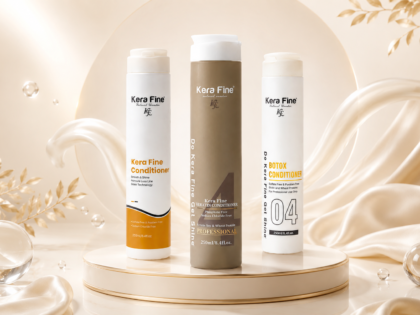
Use Kera Fine Keratin Hair Conditioner after shampooing to incorporate into the conditioning section of the hair routine for dry, rough or hard to manage hair.
Step 3: Give Dry Hair Extra Conditioning With a Hair Mask
The normal conditioner isn’t sufficient for hair that has a tendency to feel:
- Dry
- Rough
- Tangled
- Stiff
- Difficult to manage
That’s where a hair mask can prove to be useful.
A mask is an optional step of conditioning, but it is not always more is better. Light hair can become weighed down by heavier products, and dry or textured hair can require richer conditioning.
Depending on the state of your hair, select the frequency, and apply the product according to instructions.
Kera Fine Recommendation: Hair Masks for Dry, Frizzy Hair
If your main concern is dry, rough-looking lengths, consider adding an appropriate Kera Fine hair mask to your routine.
Options such as the Kera Fine Moroccan Argan Oil Hair Mask or Kera Fine Keratin Hair Mask can be positioned here according to the reader’s hair-care needs.
Step 4: Stop Rubbing Your Hair Dry
This little practice can make a huge difference in the way that you treat your hair.
Hair that is wet is more susceptible to damage and dermatologists say that rubbing or brushing hair is not good. Rather, wrap hair, or gently pat out any excess water.
Instead of:
Rub → twist → pull → rub again
Try:
Wrap → gently press → blot → leave to dry
If you need to do something soft to work with your hair, a microfiber towel or soft t-shirt can be a good choice.
Step 5: Detangle With Less Pulling
When hair is continually being tugged through knots, it could be that it is being subjected to unnecessary mechanical strain.
This will depend on the type of hair that you have.
When drying out straight hair, the AAD advises to allow a bit of drying before combing it gently. If the hair is tightly curled or has a texture it may help to detangle it when wet to minimize breakage.
Try this:
- Start at the ends.
- Work upward gradually.
- Use a wide-tooth comb when suitable.
- Don’t force the comb through knots.
- Avoid repeatedly brushing just to make every strand perfectly flat.
Step 6: Use a Serum or Leave-In Product When Your Hair Needs It
A good anti-frizz hair serum or leave-in can assist with hair feel, look, and manageability.
The trick is to use the proper dosage.
Start with a small amount on the mid-lengths and ends of the hair. You can always add more if you need it.
Fine hair?
Start light.
Thick, dry or curly hair?
Suitable or additional conditioning support may be needed for your hair.
Chemically treated hair?
Search for products that help to condition and manageability.
Kera Fine Recommendation: Vita Fusion Hair Serum
Kera Fine Vita Fusion Hair Serum can be used as a post wash product as it can be a finishing product to help hair smooth and easy to manage.
Step 7: Reduce Excessive Heat
Heat styling can be useful in styling but it leads to hair damage.
If you regularly use:
- Straighteners
- Curling irons
- Hot brushes
- Blow dryers
Try to decrease the temperature and frequency.
The AAD recommends only using heat protection and low or medium settings when using heat styling.
And remember:
Don’t assume that there is a correlation between longer and smoother if you are adding more heat.
Why Is My Hair Frizzy After Washing?
Don’t assume that a shampoo causes frizzy hair just because your hair appears frizzier after you wash them.
Look at the entire routine.
You may be:
Using very hot water
→ Try comfortably warm water.
Shampooing the lengths aggressively
→ Focus cleansing on the scalp.
Skipping conditioner
→ Condition the lengths after shampooing.
Rubbing with a towel
→ Gently blot instead.
Pulling through wet knots
→ Detangle according to your hair type.
Using too much heat afterward
→ Reduce temperature and frequency.
Using a routine that doesn’t suit your hair type
→ Adjust products and washing frequency to your hair’s needs.
The AAD provides specific recommendations for using shampoo, such as applying it directly to the scalp, conditioning after shampooing, handling wet hair with care and limiting heat exposure.
Why Does Humidity Make Frizzy Hair Worse?
A high humidity is one of the most common irritations of people who have frizzy hair.
If the air is more humid, water will react with the hair and alter the shape of the hair. Dry or porous hair can be especially sensitive, and naturally curly/waisted hair can become more loose or frizzy.
This is why your hair may appear so different:
Inside an air-conditioned room → smooth
Outside in humid weather → puffy
Rather than removing all the water from the hair, concentrate on conditioning, protecting and treating the locks with care.
Humidity-friendly habits
- Don’t over-cleanse.
- Condition consistently.
- Reduce excessive heat.
- Use suitable leave-in care.
- Avoid repeatedly touching your hair.
- Reduce friction.
- Protect naturally curly or wavy hair from unnecessary manipulation.
Changing your hair care routine according to the seasons can make it easier to care for hair during hot and humid Indian weather.
How to Fix Hair That Feels Like Straw
Before purchasing another product, step back if your hair is dry, rough or straw-like.
Ask yourself: What’s changed recently?
- More heat styling?
- New hair color?
- Bleaching?
- Chemical treatment?
- More frequent washing?
- Less conditioner?
- More time in the sun?
- Swimming?
- More brushing or manipulation?
Dryness and damage can be caused by several factors. The best answer is to eliminate the stressor and increase conditioning and handling.
Try a simpler routine:
Gentle cleansing
↓
Consistent conditioning
↓
Apply to the hair as a mask as necessary.
↓
Gentle drying
↓
Less heat
↓
Appropriate leave-in or serum product.
Don’t make major changes in your routine every couple of days. Allow your hair care routine to work out if it is working or not.
How Do I Get Rid of Frizz in 5 Minutes?
If you are running out the door and want some control over your hair in a hurry, you can opt for a short finishing routine.
Your 5-minute frizz-control routine
1. Find the problem areas.: If only a few areas of the head are frizzy, do not pour a big amount of the product on the entire head.
2. Lightly smooth the area.: Use slightly damp hands or a suitable leave-in product.
3. Apply a small amount of serum.: Concentrate on the lengths and visible flyways.
4. Smooth gently.: Brush carefully with hands or comb instead of forcefully brushing.
5. Use low heat if necessary.: When blow-drying, be careful of the heat.
This can help your hair appear smoother and more controlled, but it will not permanently change the cause that is resulting in frizzed hair.
How to Improve Frizzy Hair Naturally
It’s not necessary to have a complicated routine to begin with improving frizzy hair.
Keep it simple:
01. Wash gently: Do not over cleanse or scrub the lengths.
02. Condition consistently: Provide the lengths the conditioning they require.
03. Reduce heat: Keep the heat from the ironing and styling down and in less frequent use.
04. Reduce friction: Be gentler when drying, detangling and styling.
05. Protect your natural texture: If you have waves and curls.
06. Avoid unnecessary manipulation: Brushing and handling the hair many times can do more harm than good.
Natural hair care doesn’t mean you need to use no processed products. It’s all about undergoing a routine that will help your hair rather than repeating stress.
How to Manage Frizzy Curly and Wavy Hair
If you have naturally curly or wavy hair, you don’t need to go for the perfect look.
Your goal should be:
More definition + less unwanted puffiness + better manageability.
Moisturizing, conditioning and gentle detangling are recommended for curly and tightly textured hair, which may be more prone to dryness and breakage, according to the AAD.
For curly hair:
Avoid excessive and unnecessary washing.
- Use moisturizing products suited to your texture.
- Condition the length.
- Detangle gently.
- Never dry brush as it may result in breakage or frizz.
- Reduce unnecessary heat.
- Consider leave-in conditioning.
- Minimize friction while sleeping.
For wavy hair:
Focus on lightweight conditioning and gentle styling so you can manage frizz without weighing down your natural wave.
The natural texture is not the issue.
The aim is to make it easier to manage your hair and maintain its natural look and feel.
What Are the Best Ingredients to Look for in Anti-Frizz Hair Products?
There is no one ingredient that’s best for frizzy hair. Rather, consider the purpose of the various kinds of ingredients.
01. Conditioning agents: These can enhance slip and softness and make it easier to manage.
02. Humectants: They do a great job at attracting and retaining water, but this can vary depending on the overall formula and conditions.
03. Oils and emollients
They can enhance the shape and texture of dry hair and make it soft.
04. Silicones: Some silicones are frequently added to hair products to reduce friction, give hair a shine and make it easier to manage.
05. Hydrolyzed proteins: Hydrolyzed proteins are sometimes included in some formulas to condition and enhance processed or damaged hair.
The important part?
Avoid selecting a product because of only one ingredient.
This is more about the complete formula, and your hair type and how your hair reacts to it.
Best Hair Products for Frizzy Hair: What Do You Actually Need?
For frizzy hair you don’t need 10 different products, instead:
Start with the basics:
| Your concern | Product category |
| Cleansing | Shampoo |
| Daily conditioning | Conditioner |
| Extra conditioning | Hair mask |
| Post-wash manageability | Serum / leave-in |
| Heat styling | Heat protectant |
| More intensive smoothing needs | Professional treatment |
The right product will depend on the problem and the reason your hair is frizzy.
Build Your Frizzy Hair Routine With Kera Fine
After finding out what you need to address, you can make a simple routine instead of purchasing products randomly.
1. Cleanse
Kera Fine Smooth & Shine Shampoo
To get smoother and easier to manage hair, you can use it as your cleansing step.
2. Condition
Kera Fine Keratin Hair Conditioner
To use regularly after shampooing.
3. Deep Condition
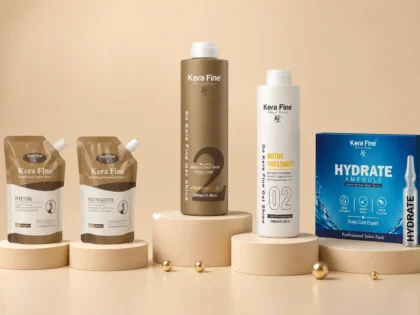
Kera Fine Hair Masks
When hair requires extra conditioning, particularly in long hair which is dry or rough.
4. Finish
Kera Fine Vita Fusion Hair Serum
To be used after washing for post wash finishing and manageability.
5. Professional Care
Kera Fine Keratin & Botox Treatment Range
For people looking for more intensive professional hair-care options.
The intention is not to utilize all of them. Pick the steps that are necessary for your hair.
When Should You Consider Professional Hair Care?
Frizziness that happens daily may be preventable by proper at-home care, but a salon treatment might be an option if your hair is extensively dry, has been chemically processed multiple times, you are still not satisfied with how it looks and feels, or you want a smoothing effect that you can’t get.
If considering a professional treatment, take into account:
- Your natural hair texture
- Current hair condition
- Previous chemical treatments
- Heat-styling history
- Your desired result
- How much maintenance you’re comfortable with
Any sudden or dramatic change in your hair, or hair loss that you don’t understand, is a better reason to visit your dermatologist than thinking that it’s just frizz.
Common Hair-Care Mistakes That Can Make Frizz Worse
The following are the most common hair care mistakes that makes hair more frizzy:
1. Washing with very hot water
Treat with: Warm water instead that’s comfortable.
2. Rubbing your hair dry
Try: Gently wrap or blot.
3. Aggressively shampooing the lengths
Try: Focus shampoo on the scalp.
4. Skipping conditioner
Try: Condition after washing.
5. Excessive heat styling
Try: Build your routine around your texture, scalp and hair condition.
6. Brushing through knots
Try: Gently detangle and depending on the type of hair.
7. Using too much product
Try: If you can, use just a little at first and gradually increase the quantity if necessary.
8. Treating every hair type the same
Try: Take your texture, scalp and hair condition into consideration when creating your routine.
Dermatologists even suggest different washing, conditioning, detangling and heat routine by hair type.
Frequently Asked Questions About Frizzy Hair
Q1. What can I do to prevent frizzy hair?
Pay attention to minimising dryness, friction, excessive heat and harsh handling. Regular conditioning, slow drying and correct styling techniques can help make frizzy hair look and feel better and easier to handle.
Q2. What is the main cause of frizzy hair?
It’s not a single cause for everybody. It could be caused by dryness, humidity, natural texture, heat, chemical processing and friction.
Q3. Why is my hair frizzy after washing?
Excessive heat, rough towel drying, harsh cleansing, skipping conditioner, hot water and aggressive detangling are all habits that can make hair more difficult to handle.
Q4. Does conditioner help frizzy hair?
A conditioner can help make the hair softer, and easier to detangle and manage. After shampooing, dermatologists suggest that you use conditioner, depending on the type of hair you have.
Q5. Does hair serum help with frizz?
A good serum will help your hair to look, feel and manageability of hair, while minimizing flyaways. The outcomes will be determined depending on the formula and sort of the hair.
Q6. How often should I use a hair mask?
There is no fixed timetable. Use as directed by the product and take into account dryness, texture and condition of your hair. Heavy and coated hair could be an indication that too much conditioner is being applied.
Q7. Is sulfate-free shampoo better for frizzy hair?
Not automatically. Some individuals may find sulfate-free shampoos beneficial, particularly if their hair feels dry or stripped, but your scalp, hair type and the entire formula are more important.
Q8. Which vitamin is good for frizzy hair?
Frizz alone isn’t enough to identify a vitamin deficiency. It’s important to consult with a healthcare professional before starting any supplements when you have other significant changes in your hair or other symptoms of concern.
Q9. Why has my hair become frizzier as I get older?
Hair texture and condition can vary from one time to the next. Manageability can be compromised by dryness, buildup of heat or chemicals, and changes to the hair. If the sudden or significant change continues, then it requires professional attention.
Q10. Does frizzy hair ever go away?
It can be controlled and even less visible, but there are still factors such as natural hair texture and environmental humidity that can continue to influence how your hair reacts. The aim is to manage the frizz, not necessarily to get rid of it for good.
Q11. Can I remove frizz in five minutes?
While smoothing and using an appropriate serum or leave-in can create a more controlled look on frizzy hair in a matter of minutes, five minutes of frizz correcting products will not cure the root cause of frizz.
Q12. Is it okay to cut off frizzy hair?
While trimming can do some to get rid of split and damaged ends, cutting does NOT eliminate frizz caused by humidity, dryness or natural texture in the hair.
Don’t Fight Your Hair—Understand It
Having frizzy hair does not have to be an everyday hassle.
The best answer is not a miracle product or forever frizz-free hair! It involves knowing what your hair is reacting to and altering the habits that could be causing the issue.
Start simple:
Gentle cleansing → regular conditioning → less friction → careful drying → controlled heat → targeted post-wash care.
Then, customize the workout based on your hair type and state, lifestyle and environment.
And remember: You’re not trying to get perfectly straight or completely frizz-free hair. It’s hair that feels cared for and looks smoother, and is easier for you to manage.
That’s what it comes down to for Kera Fine, whether it’s a cleanse, condition, dryness, post wash manageability or a need for professional care.
Caring for your hair doesn’t require that it be changed. It must be comprehended.